Angela Merkel served Alexis Tsipras coffee.
The fate of Greece in the euro zone remains unsettled. In difficult discussions, the leaders of the 19 euro countries have on Tuesday night strives to create the conditions for a stay of the highly indebted country in the European Monetary Union. Unlike initially expected, put Prime Minister Alexis Tsipras on Tuesday initially no written formulated proposals to resolve the debt crisis. Chancellor Angela Merkel urged the Greek government to after four hours of negotiations, submit proposals to Thursday. On Sunday, another special summit to be held with all 28 EU member states in Brussels. According to EU diplomats to be then talked about a bridge loan and a third rescue package.
- This item is updated regularly. Always the latest updates can be found in our live blog.
President Donald Tusk presented the deadline of Sunday as the last resort there. “The EU has five days to find an agreement on Greece,” he said. “This could be the most critical moment in our history.” European Commission President Juncker added that he could not rule out a “Grexit”, even if he does not want it. The Commission has worked out a detailed scenario.
According to German Chancellor Angela Merkel and French President François Hollande, the President of the European Central Bank (ECB), Mario Draghi, pledged at the meeting, the ECB will provide the Greek banks up to the summit more liquidity.
Even with a Summit previous special meeting of finance ministers of the euro zone, the new Greek Finance Euclid Tsakalotos had announced that the Athens government wants to submit an application for a third aid program from the euro rescue fund ESM. Was hoped that Tsipras would call for a short planned for this Wednesday travel to the European Parliament in Strasbourg more details on the Athens intentions.
Jeroen Dijsselbloem, the Dutch Finance Minister and President of the Euro Group, announced a teleconference with his 18 counterparts from the euro countries on Wednesday. It remained unclear at first how the Greek Government intended to respond to the claims of creditors, as to increase the value added tax to relieve the pension or to cut the defense budget.
“For Greece today probably always means mañana ‘”
Merkel said that at present is not given the basis for negotiations with Athens. This is about solidarity but also about performance and reward. The time was short. It is not a week, but a few days, Merkel said. Tsipras, who entered the EU Council building on Wednesday with a beaming smile, commented before the start of the summit is not.
Lithuanian President Dalia Grybauskaite criticized the repeated delay. “We got promised new proposals for today. But for Greece today is probably always mañana ‘. But in Europe it still can not even mañana ‘hot, “The partners in the Athens district of Finance had previously clarified that they respected the vote of the Greek voters to the recently proposed reform requirements of creditors. however put an understanding on further aids credible proposals Athens ahead.
The time a withdrawal of Greece from the euro area
– the so-called Grexit – to avoid, is becoming increasingly scarce. So must the financially strapped government until July 20, EUR 3.5 billion transferred to the redemption of maturing bonds of the European Central Bank.
Read more about
France showed, meanwhile, prepared to negotiate with Greece over a debt haircut. The French Prime Minister Manuel Valls said on Tuesday on radio station RTL. “We can not take the risk of a Greek exit from the euro zone,” Valls said. The Grexit place an unacceptable risk “to growth and the global economy” is. “France will do everything to keep Greece in the euro zone,” said the Socialist government. On inquiry confirmed Valls that this could also mean a haircut and a restructuring of Greek sovereign debt. Even French President Francois Hollande said before the summit, a fate of Greece in the euro zone was the goal. He was waiting for proposals from Athens. “Then we need accountability, solidarity and also speed show,” Hollande said. After the summit said European Commission President Juncker, on debt issues will discussed in October.
The CDU / CSU parliamentary leader Volker Kauder criticized meanwhile the actions of the Greek Prime Minister. “Tsipras has left the negotiating table and his people brought into an almost hopeless situation,” Kauder said in an interview with this newspaper. With the referendum Tsipras had gambled confidence. “What is happening now is not a new beginning of the talks, but a continuation under the same basic conditions as before. And with these basic conditions a haircut for example, would not be consistent, “Kauder said.
What happens now with Greece?
Chapter 1: Together everything is better
Chapter 2: End of euphoria
With the outbreak of the financial crisis in 2008 and a general recession, the situation in Greece worsened. The end of April 2010, the government formally applies grants. EU, European Central Bank (ECB) and the International Monetary Fund (IMF) to approve loans under strict austerity measures. The years that followed are a constant back and forth. Greece needs money again, the reforms are implemented in part, for the lender but not sufficient. Debt shall be adopted. The economic situation of the country is still getting worse, unemployment shoots up.
Late last year, the then Greek government calls new elections, because they can not agree on a new budget for the country with the donors. The EU warns of such elections, because the radical left Syriza party, which defends itself against the austerity requirements of EU, ECB and IMF could win.
Chapter 3: wishes are fulfilled
The mood in Greece is at the beginning of this year so bad that’s exactly what happens. Prime Minister Alexis Tsipras and Finance Minister Yanis Varoufakis be selected and realize many of their election promises immediately. Make official dismissed again, increase the pensions and open up the closed system of public broadcasting again. That costs a lot of money that Greece has not, but this is lead until the middle of the year to serious problems. On this June 30 namely runs from the second rescue package for Greece. The country then must operate, what it is not able without new loans a loan from the IMF. The Greeks begin to withdraw money from their accounts.
In recent weeks there for this period repeatedly crisis summit, even at the technical level with the finance ministers of the euro zone, even the leaders. Lange sees it, despite many delays of as if you look at some kind. While the financiers and Greece argue over whether the country should above all by an increase in income, for example through an increase in VAT, or by cuts, as a reduction in pensions achieve reform conditions of donors. The financiers call for these cuts forcing Greece Bucks. Most observers assume, however, that will be agreed in late night sessions just before the deadline once again to a compromise. The European Central Bank bridged the financing difficulties of Greece at this time with emergency loans (Ela). The Greeks raise more money from their accounts.
Chapter 4: Escalation
But then the situation escalates end of the week. Alexis Tsipras calls for many observers and participants totally unexpected from a referendum on the austerity proposals of donors. The people should decide whether it wished to accept the terms of donors or not. The Greek Government has positioned itself clearly and is calling on voters to vote against the proposed reforms. Again and again was thought in the past about such a referendum, but so precipitously no one expected it.
With this referendum is on the one hand clear that until June 30, no agreement can be reached, because the vote is expected until next weekend take place. On the other hand, the Greek Government EU, ECB and IMF alienated so that Greece is excluded from the negotiations. Tsipras requested an extension of the utility until the referendum, but the donors refuse. The fronts are so hardened than ever. The Greeks are trying as much money as possible to withdraw, it formed queues at ATMs.
The announcement of the referendum takes many steps to be. The European Central Bank does not increase its emergency loans. Since Greece has almost exhausted this credit line, the country is no longer manage to connect with new money. The government announces capital controls and closes the banks. The Greeks are likely to stand out since only 60 euros a day at the ATMs and transfer only within the country money. On June 30, the Greek government uses their credit at the IMF not and is now officially in default.
Read more – >
Chapter 5: And now?
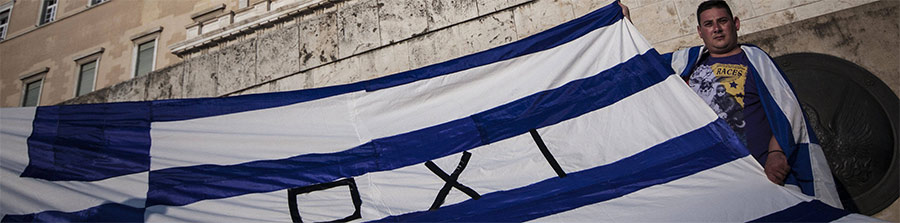
The Greeks have surprisingly clearly decided in their referendum against the reform plans of the donors and their own government initially strengthened the back. What will happen in the coming weeks, is now the big question. Will Greece go bankrupt within the euro or running it on a Grexit addition? If there is a haircut? As the country gets new money and how it works in the long term with the Greek government on? In the ever-changing situation, hardly anyone wants to define a safe solution more. Only one thing seems certain: Nothing is excluded.
You can acquire the rights to this article

<- ========= Confirmation page:.! Will be loaded by JS if submission is successful === ============ ->
.


No comments:
Post a Comment